Our Blog
Stories, tips, and updates from our shrimp keeping journey.
ADVANCED READING: Aquarium Cycling; A Geneticist’s Guide to the Aquarium Microbiome
Most aquarium “cycling” advice treats ammonia as a starting input and focuses narrowly on test-kit numbers. In reality, ammonia is not added to a system — it is released. Before nitrification can occur, heterotrophic bacteria and fungi must first mineralise proteins, chitin, and other organic nitrogen sources, freeing ammonium as an inorganic nutrient. Only then can nitrifying microbes oxidise it to nitrite and nitrate. In mature aquaria, these processes are tightly coupled within biofilms, allowing ammonia to be consumed almost as quickly as it is produced. This biological integration — not bottled bacteria or arbitrary timelines — is what separates a merely “cycled” tank from a truly established ecosystem capable of supporting long-term shrimp health and breeding success.
Read more →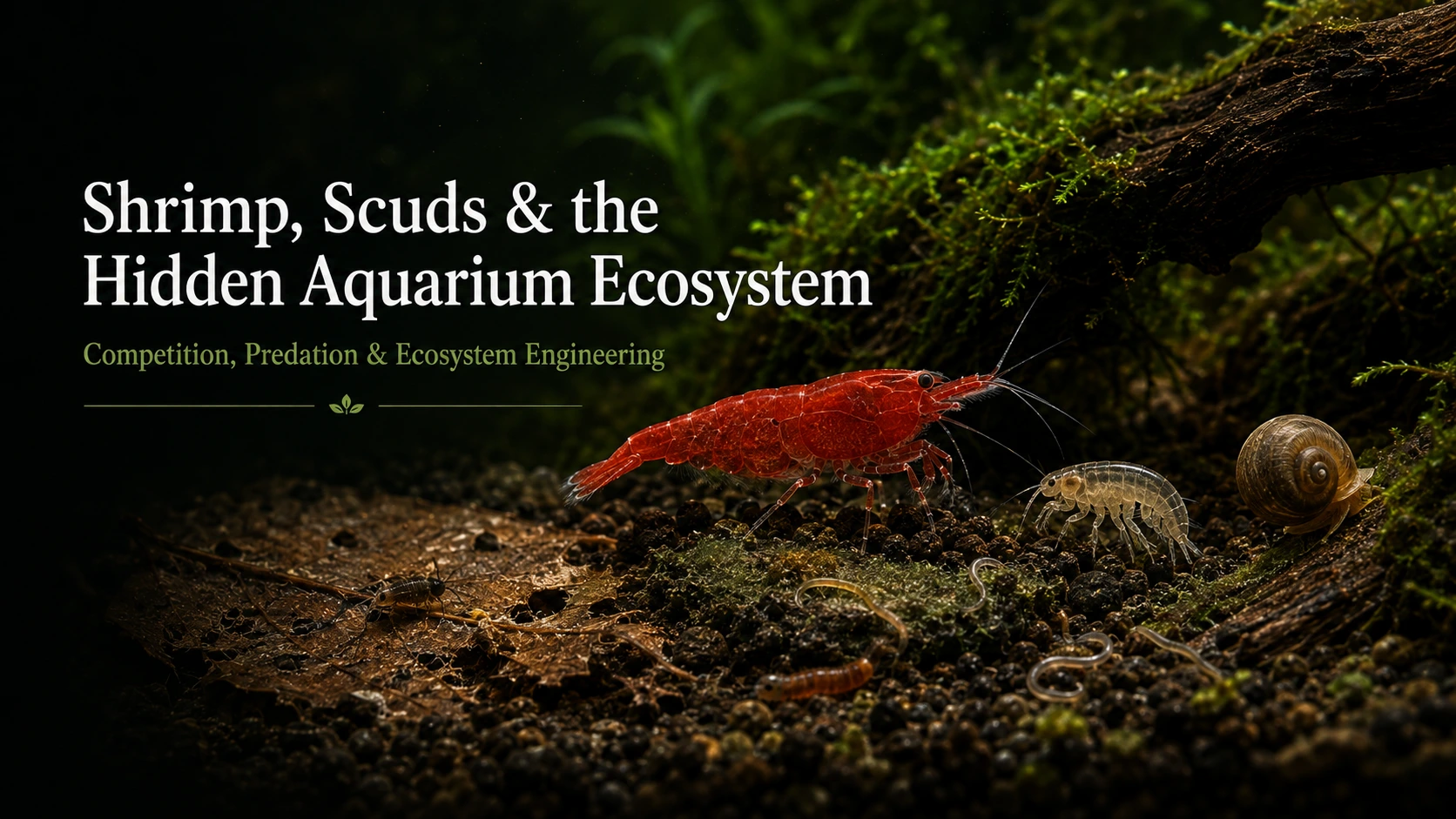
Shrimp, Scuds and the Hidden Aquarium Ecosystem
A mature shrimp aquarium is far more than shrimp, plants and water. Scuds, snails, worms, copepods and other microfauna form a hidden food web that competes for resources, recycles nutrients, modifies the substrate and sometimes becomes prey itself. Understanding these ecological roles helps explain why some populations explode, why others decline, and how shrimp fit into the larger aquarium ecosystem.
Read more →
Beyond the Single Pellet: How Dietary Diversity Shapes Shrimp Growth, Reproduction and Colony Stability
A single complete food may sustain a shrimp colony, but a carefully designed rotation can support far more than basic survival. By combining complementary protein, lipid, pigment, mineral and plant sources with biofilm, leaf litter and juvenile-sized foods, a varied diet can support maternal provisioning, growth, reproduction and microbial food webs. The key is not simply feeding more foods, but using each food for a defined biological purpose while keeping the total ration controlled.
Read more →
Beyond Clean Water: How Habitat Enrichment Shapes Aquarium Behaviour, Survival and Reproduction
Clean water may keep an aquarium animal alive, but it does not automatically provide a complete habitat. Fish and shrimp carry evolved behavioural motivations into captivity, including the need to hide, forage, explore, regulate social contact and select suitable reproductive sites. Species-appropriate enrichment reduces the mismatch between these biological drives and the opportunities provided by the aquarium, creating conditions that may improve behaviour, welfare, survival and reproductive success.
Read more →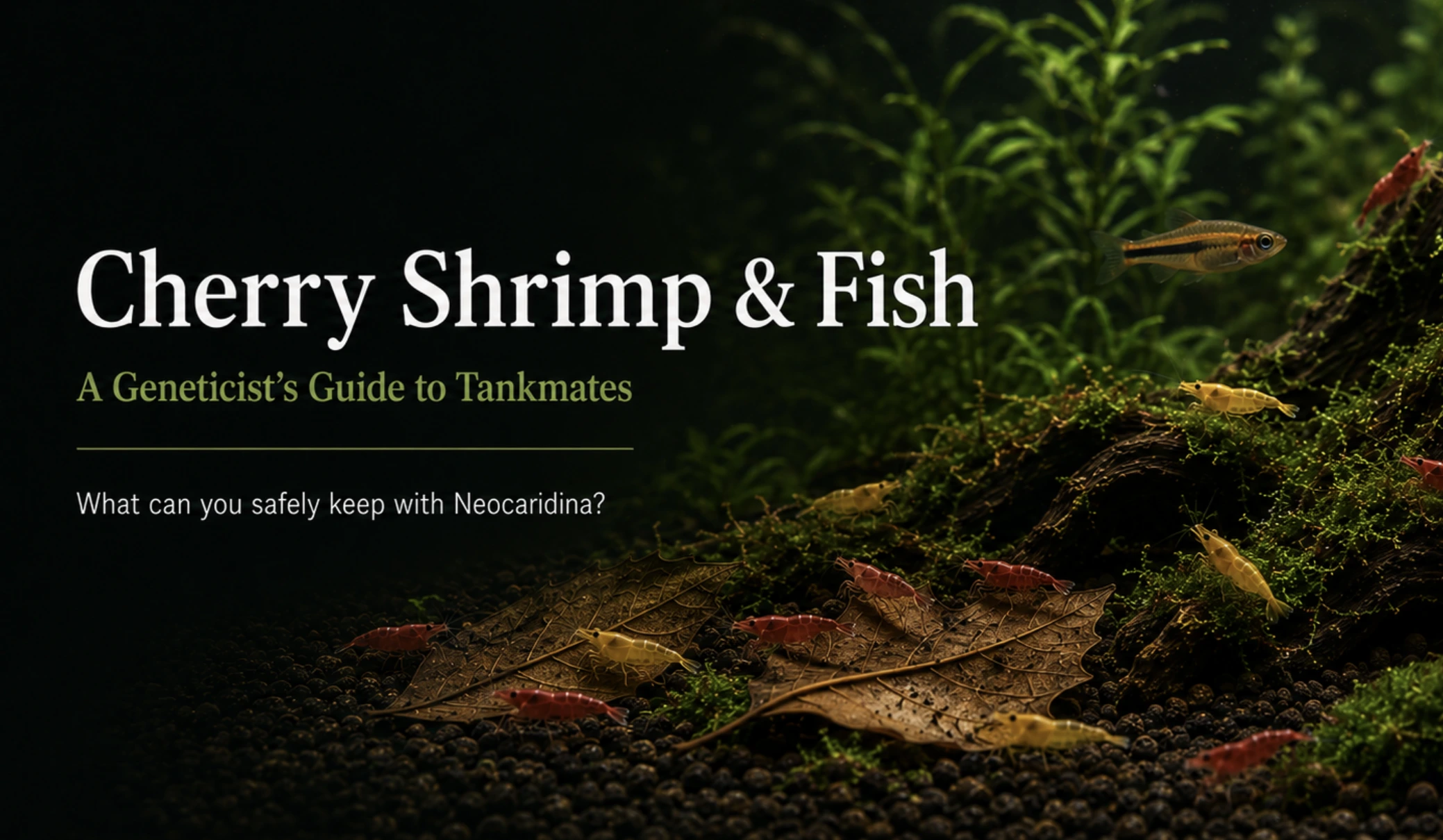
Shrimp and Fish: A Predator–Prey Guide to Community Aquariums
Is there actually such a thing as a 'shrimp-safe' fish? While many hobbyists claim their community tanks are peaceful, the biological reality is much different. As someone with a scientific background, I look at the predator-prey relationship through a lens of survival and stress. In this article, I break down why almost every fish is a potential threat to your shrimplets, which species are the only true exceptions, and how you can use specific plants to 'engineer' a safe haven for your colony
Read more →
Cheap Aquarium Equipment: A Scientist’s Guide to Material, Toxicity and Failure Risk
Budget aquarium equipment is not automatically unsafe, and expensive branding does not guarantee quality. The real issue is risk: what the product is made from, how long it contacts the water, whether it can be removed easily and what happens if it fails. Simple passive items may be sensible places to save money, while electrical equipment, substrates, foods and water additives require far stronger traceability because they can directly alter aquarium chemistry, plant physiology and shrimp health.
Read more →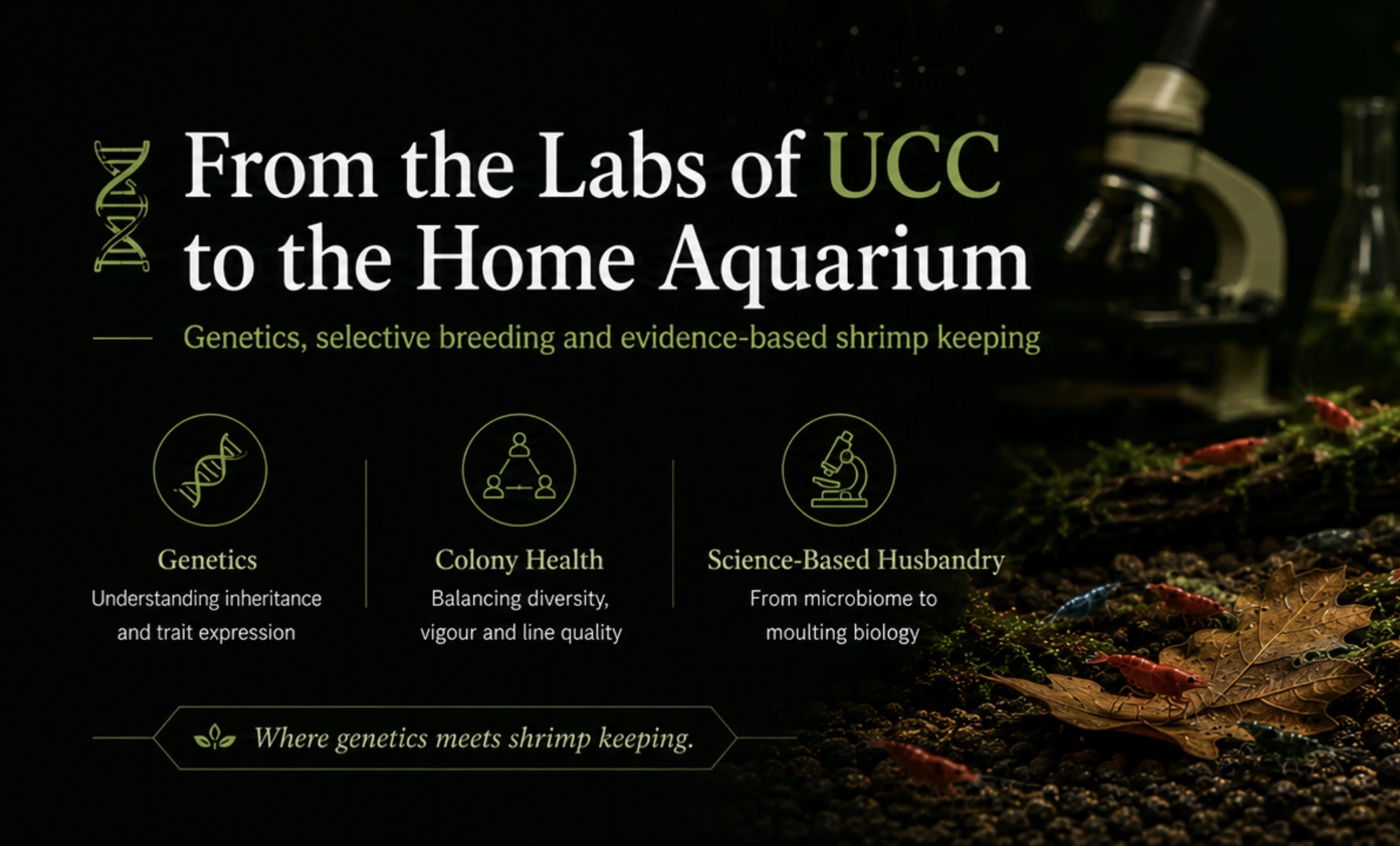
Introduction: From the Labs of UCC to the Home Aquarium
Just Keep Shrimping began where genetics, aquarium biology and selective breeding meet. Drawing on our scientific training at University College Cork, we examine shrimp colonies as living populations shaped by inheritance, environment and selection. Our goal is to translate concepts such as genotype, phenotype, microbial ecology and genetic diversity into practical, evidence-based advice for healthier shrimp and more stable breeding lines.
Read more →