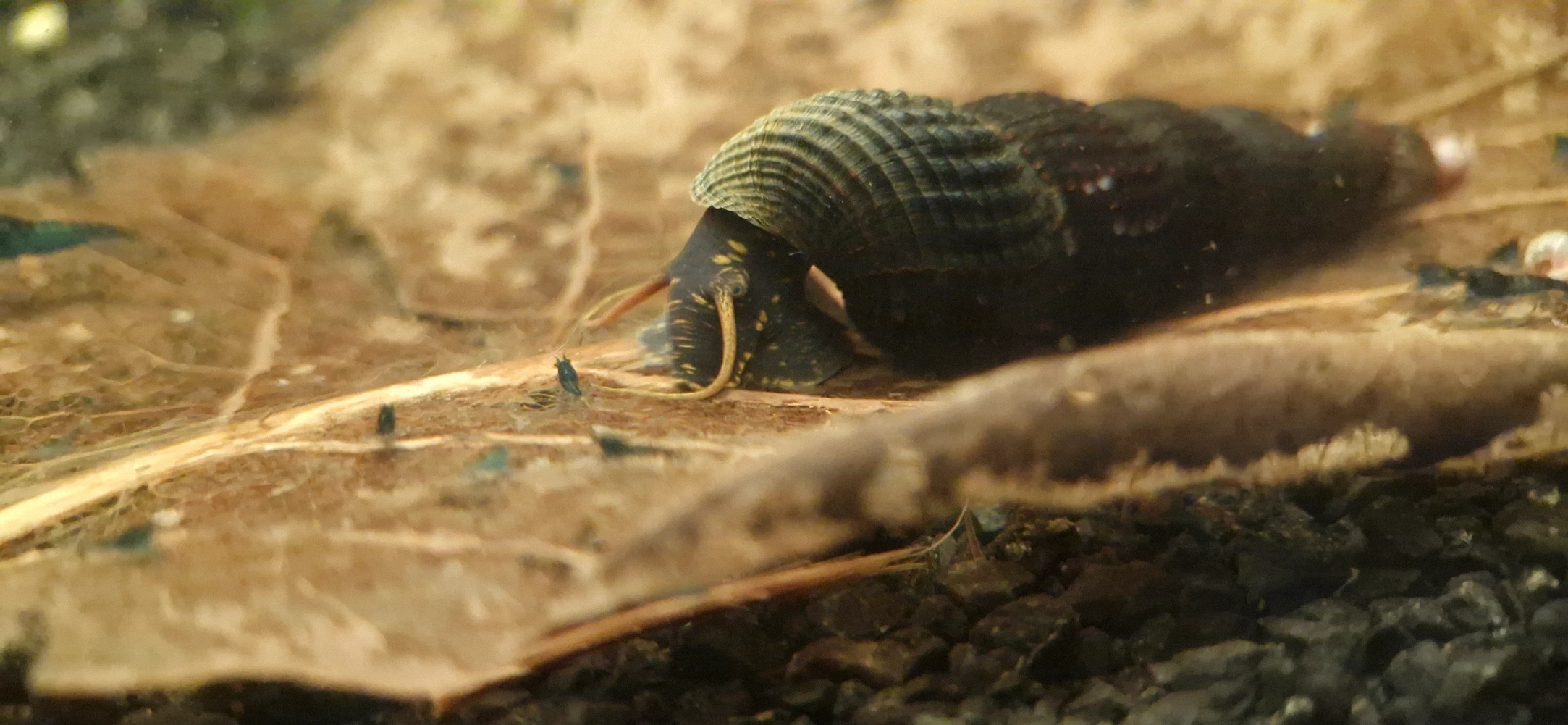
Tylomelania sp. - Yellow Spot (Young)
🐌 Sulawesi Collector Snail
🔥 Yellow-Spotted Body
🌡️ Warm-Water Species
🟡 Slow-Breeding Livebearer
🇮🇪 Breeding project maintained in Cork, Ireland
Tylomelania Yellow Spot Variant (Tylomelania sp. “Yellow Spot”) is one of our slowest and most carefully managed snail projects.
Important notice: Snails will arrive young at approximately 3-4 cm in size.
This Sulawesi snail has a dark, sculptured shell and a striking yellow-spotted body, giving it a very different appearance from common aquarium snails.
🔥 Unlike fast-breeding ramshorns or bladder snails, Tylomelania are slow livebearers. They produce individual, well-developed babies rather than large egg clutches.
🟡 Because of their rarity and slow reproduction rate, this species is sold individually only. Each animal represents a significant part of a developing breeding project.
Our group is maintained in warm, mature aquariums with plenty of biofilm, botanicals and natural grazing surfaces.
🌡️ Difficulty: Intermediate
📖 Curious about the origin, care and breeding behaviour behind this species? Explore the More Information section below.
3 in stock
More Information
Tylomelania sp. “Yellow Spot”
A rare Sulawesi rabbit snail with a dark sculptured shell, yellow-spotted body and slow livebearing reproduction.
🌋 A Sulawesi Specialist
Tylomelania snails are among the most distinctive freshwater snails in the aquarium hobby.
They originate from Sulawesi, Indonesia, where many species and forms have adapted to warm, mineral-rich waters.
The Yellow Spot Variant is especially attractive because of its contrast:
🖤 Dark sculptured shell
🔥 Yellow-spotted body
🐌 Large, deliberate grazing behaviour
🟡 Slow livebearing reproduction
This is not a basic clean-up snail. It is a proper collector species for hobbyists who enjoy unusual freshwater invertebrates and long-term breeding projects.
🔥 Appearance
The Yellow Spot Variant has the classic Tylomelania shape: a long, textured shell with a dark, rugged appearance.
The body is the real highlight. Against the dark tissue, the yellow spotting creates a bold, almost volcanic look.
As adults, these snails can become substantial animals, often reaching around 5–6 cm depending on age, line and conditions.
💡 Larger individuals are usually older animals and should be treated as valuable breeding stock rather than disposable clean-up crew.
🟡 Why We Sell Them Individually
Unlike ramshorns, bladder snails or many common aquarium snails, Tylomelania reproduce very slowly.
Females do not lay large egg clutches. Instead, they produce single, well-developed baby snails.
That means every juvenile matters.
Because of this slow reproductive rate, we sell this species individually only.
This allows us to protect the breeding group while still making limited animals available once we have enough stable, healthy stock.
🍼 Breeding Behaviour
Tylomelania are livebearing snails.
Instead of scattering eggs around the aquarium, females carry developing young internally and release fully formed babies.
This makes breeding slower, but also much more controlled.
For us, this is one of the most rewarding parts of keeping them. Every baby is noticeable, trackable and genuinely valuable.
🌿 Behaviour and Tank Role
Yellow Spot Tylomelania are peaceful, steady grazers.
They spend much of their time exploring:
🌱 Biofilm-covered surfaces
🍂 Leaf litter
🪨 Stones and hardscape
🪵 Wood
🌿 Mature substrate
They are not aggressive and do not damage healthy plants in normal conditions.
They are best thought of as display grazers, not high-speed algae cleaners.
🌡️ Recommended Aquarium Conditions
These snails do best in warm, mature, stable aquariums.
Recommended range:
🌡️ Temperature: 26–30°C
💧 pH: 7.5–8.5
🧪 GH: 8–15
🧪 KH: 4–10
☠️ Ammonia: 0
☠️ Nitrite: 0
🌿 Nitrate: Ideally below 20
🪨 Substrate: Sand or smooth gravel preferred
🦠 Tank maturity: Mature, biofilm-rich aquariums strongly recommended
They are generally not suitable for cool, soft, acidic aquariums.
🥬 Feeding
A mature aquarium with natural grazing surfaces is ideal, but Tylomelania should still be fed directly.
Good foods include:
🥬 Blanched vegetables
🌿 Algae wafers
🟢 Spirulina-based foods
🍂 Leaf litter and botanicals
🐌 Quality snail foods
🦐 Shrimp foods in moderation
Calcium and mineral availability are important for shell condition and long-term health.
Uneaten food should be removed before it fouls the water.
⚠️ Important Notes
Avoid keeping Yellow Spot Tylomelania in:
❌ Immature tanks
❌ Soft acidic water
❌ Cold aquariums
❌ Tanks with ammonia or nitrite instability
❌ Aquariums with assassin snails
❌ Tanks with puffers, loaches or snail-eating fish
These are slow, valuable animals. They should be treated as specialist Sulawesi invertebrates rather than ordinary utility snails.
🇮🇪 Our Approach
Our Yellow Spot Tylomelania group is maintained in Cork, Ireland as part of our long-term freshwater invertebrate breeding projects.
We are not rushing this line.
Because they reproduce slowly, we only release animals when the group is stable and we are confident that enough young are growing on behind the scenes.
For us, this is exactly the kind of species that makes the hobby interesting: unusual, peaceful, beautiful and slow enough that every successful baby actually matters.
📊 Quick Summary
🧬 Scientific name: Tylomelania sp. “Yellow Spot”
🌋 Origin: Sulawesi, Indonesia
🔥 Type: Yellow-spotted rabbit snail
🌡️ Temperature: 26–30°C
💧 Water: Warm, hard, alkaline
🍼 Reproduction: Slow livebearer
🌿 Plant safe: Yes
🦐 Shrimp safe: Yes
🐌 Sold as: Individual animals only
🌡️ Difficulty: Intermediate
🇮🇪 Maintained by: Just Keep Shrimping, Cork, Ireland
Customer Reviews
No ratings yet. Purchased this colony? Keep an eye on your inbox — we'll invite you to share your honest feedback.